
Adult Use
Sign up now and get rewards! Join VeriVIP
Due to the shortage of pennies nationwide, your transaction will be rounded to the closest $00.05 (nickel)


Edibles 101: What Are Cannabis Edibles & How Do They Work?
Marijuana edibles are a favorite at our dispensaries, because they offer a huge selection of THC-infused food and drink to fit just about any palate. From sugary sweet to unique and salty, there’s more variety on the edible market than ever before. It’s enough to make your head spin, but that’s why we’re here.
In this guide, we’ll answer the questions:
- What Are Marijuana Edibles?
- How Much THC is in Edibles?
- How to Read Edible Packaging Labels
- What are the Different Types of Edibles?
- How Do Cannabis Edibles Work?
- Choosing the Right Type of Edible
- Edible Storage and Shelf Life
- FAQs About Edibles
Edibles
Also: THC Edibles, Cannabis Edibles, Marijuana Edibles
Edibles are cannabis-infused food products. Depending on how they’re made, they can contain THC, CBD, and a variety of cannabinoids and terpenes. Edibles are available in a variety of forms, including brownies, cookies, candies, chocolates, drinks, biscuits and even popcorn.
What Are Edibles
Cannabis edibles are food or drink products infused with cannabinoids, most commonly THC, that can trigger psychoactive effects when consumed. There are many types of edibles, including gummies, baked goods, mints, lozenges, drinks, and more. The most common cannabinoid found in edibles is THC, but you can also purchase products that are infused with CBD, CBN, and other compounds from the cannabis plant.

Dispensaries often sell edibles in a variety of dosages, each with a precise amount of THC to ensure a consistent experience. Edibles are most often ingested orally and must pass through the digestive system before the consumer feels any effects. This means edibles can take longer to kick in, but their effects last longer than other consumption methods like smoking, vaping, or dabbing.1
Bite-Sized: An Edible History
While it may seem like eating cannabis is a modern invention, the practice actually goes all the way back to our hunter-gatherer days. Experts estimate early human foragers first stumbled upon the wild cannabis plant around 50,000 years ago and quickly recognized its potent capabilities.2 It’s likely they ate it long before they ever started smoking it, with the first evidence of human combustion of cannabis dating back just 2,500 years.3
Interestingly enough, 50,000 years ago coincides with what many anthropologists call “the great leap”; a sudden advancement in our capacity for language and the complexity of our tools, hunting methods, jewelry, and art.4 When we transitioned into agriculture, we brought the cannabis plant with us, and the rest, as they say, is history.
How Much THC is in Edibles?
Edibles purchased at a dispensary come in a variety of THC strengths, ranging from a 1 mg microdose to as high as 100 mg of THC (depending on state limits). The benefit of prepackaged cannabis edibles purchased from a dispensary is the exact dosing; each individual gummy, chocolate, or lozenge is guaranteed to contain the exact same amount of cannabinoids as all the rest in the package. Often, those who prefer to make their edibles at home may experience a bit of a learning curve when first starting out, especially with dosing those initial batches.5 Our guide on cooking with cannabis can help you avoid some of these common pitfalls, and have you whipping up gourmet canna-creations in no time.

How to Read Edible Packaging Labels
Understanding how much THC is in edibles can get a little confusing if you’re not sure how to read the packaging. The product label for cannabis edibles will list dosages that typically range from 2.5 mg to 10 mg. This number is how much THC is in each serving.6 So if you have a chocolate bar with twelve squares, and each square is a 5 mg serving, that entire chocolate bar has 60 mg of THC in it. You could also have a package of 10 gummies, each with 10 mg of THC, making the package 100 mg total.
Knowing how much THC is in your edible and how that edible’s THC breaks down by serving will help you better dose your edible.7 A new cannabis enthusiast may choose to have a single 5 mg square of chocolate, while a seasoned cannabis connoisseur may take three squares for a 15 mg experience. It all depends on your individual tolerance.
How Long Does It Take for Marijuana Edibles to Work?
Cannabis edibles can take anywhere from 30 minutes to two hours to start working. However, this depends on a wide array of factors, including your method of consumption; the edible’s THC potency; what else you ate that day; and your tolerance level. All these variables can make it hard to estimate exactly when and how you’ll feel an edible. We always recommend waiting at least a full hour to feel the effects of an edible, especially if you’re thinking about taking another dose. Start low and slow while you figure out your sweet spot.5
Different Types of Edibles
It would be almost impossible to list all the different types of marijuana edibles because of just how many variations have hit the market—and how many more are yet to come. Today’s cannabis shoppers can find everything from cannabis-infused BBQ sauce to dried apple slices.9 That said, the most popular types of edibles at dispensaries fall into one of these eight categories:

Gummies & Chews
Gummy edibles may be the most well-known formation of cannabis edible.1 They come in all different sizes and flavors, offering different CBD and THC percentages. In fact, it’s their versatility that makes gummies the typical go-to product for new cannabis consumers.


Baked Goods
While marijuana brownies are one of the most popular baked edibles, they’re not the only kind. The industry has expanded exponentially when it comes to baked cannabis products, selling cookies, pancake mix, brownies, rice krispie treats, and more.8 You can buy these pre-dosed from your local dispensary or make them at home.


Beverages
Yes, you can drink your cannabis. Cannabis beverages come in all different varieties—from seltzers to teas, juices and more. And if you prefer to make your own drinks, there are many drink mixes and powders that include cannabinoids like THC, letting you create the perfect beverage at home. You may feel the effects of cannabis beverages faster than other edibles because the cannabinoids are made to dissolve in liquid, meaning your body can absorb them quicker.9


Tinctures
A marijuana tincture is made through an extraction process that involves soaking decarboxylated cannabis flower in high-proof alcohol, oil, or glycerin. The resulting liquid, the “tincture,” is typically amber-colored and taken orally, whether by dispensing a few drops under the tongue or swallowing it.10


Lozenges & Mints
Lozenge and mint marijuana edibles are typically smaller and made in lower dosages for discrete microdosing. These products dissolve in your mouth, meaning the cannabinoids are absorbed through the cheek wall or under the tongue. As a result, consumers may feel effects faster than digested edibles.11


Chocolates & Chocolate Bars
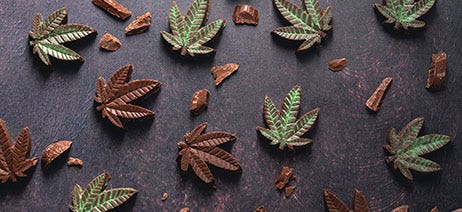
Much like the sweet treat we know and love, cannabis-infused chocolates and chocolate bars are a rich and creamy delight. Some cannabis cultivators have even taken to partnering with pastry chefs and bakeries to offer culinary creations that mirror non-infused products. (Just remember to stick to the right dosage to avoid unintentional results!)

Pills & Capsules
THC pills are simply edibles in capsule form. A THC pill may contain ground-up, decarboxylated flower; THC distillate; or THC isolate in a capsule. There are also CBD pills available. These pills are swallowed whole and then processed through the digestive system like most other edibles.17 This means the timing of their effects is similar.
How Do Edibles Work?
Cannabis edibles work by being absorbed through the mouth or stomach. The cannabinoid or cannabinoids and terpenes are absorbed through the thin skin of your mouth and under your tongue or via digestion. Then, they enter the bloodstream and start affecting the receptors in your endocannabinoid system the same way as any other cannabis product.
So what do edibles do to you? Well, when it comes to edibles that have both cannabinoids and terpenes, you may experience the entourage effect. This is the idea that cannabinoids and terpenes all work together (not just THC alone) to create the intoxicating feelings that come with cannabis consumption. While edibles with only THC isolate in them still create a psychoactive effect, there is no entourage effect because there’s only one cannabinoid that’s activated in the product.

Choosing the Right Type of Edible
We always recommend starting low and going slow. Edibles are so popular because they can be so easily customized to your needs. And in today’s cannabis market, if you have a favorite food, you can find it in marijuana edible form.
Your choices are limitless, but if there were to be any deciding factors, they would be how quickly you want to start feeling the effects and whether you have any dietary restrictions. And remember that dispensary budtenders are experts in selecting the right product, so be sure to ask questions.
Edible Storage and Shelf Life
To keep your edibles fresh for as long as possible, you’ll want to limit their exposure to air, heat, and light. This means the ideal edible storage situation is an airtight container somewhere cool and dark. A freezer can be great, but take into consideration what kind of food your edible is; tinctures won’t freeze very well, and neither will popcorn. Even with proper storage, some cannabis enthusiasts claim that the THC in edibles can start to break down after just 3-6 months. Others say it takes at least a year.13 You can refer to the expiration or use-by date printed on your edible’s packaging.
Store-bought edibles last longer than homemade, so be sure to label your own batches with a date when you make them. And because edibles can look like so many popular tasty treats, it’s a good idea to put them in a secure place in your household.

FAQs About Edibles
There are very few topics that are tastier to talk about than edibles. Here are a few questions our budtenders answer on a day-to-day basis:
What is the difference between CBD and THC edibles?
The difference between THC and CBD edibles is that THC edibles will cause psychoactive effects and CBD edibles will not. THC, or tetrahydrocannabinol, is the cannabinoid responsible for the intoxicating experiences cannabis consumers enjoy. To purchase edibles with THC, you need to visit one of our dispensaries. CBD, or cannabidiol, is a cannabinoid with no psychoactive effects. Instead, it’s being studied for its potential therapeutic effects. It is possible to purchase CBD edibles outside of a dispensary, but we don’t recommend it. The CBD market is unregulated, so you don’t really know the quality of the product that you’re getting.
Do edibles taste like marijuana?
Many edibles purchased at a dispensary have little-to-no marijuana taste, as they are infused with fruity, sugary, or salty ingredients to mask the bitter flavors of cannabis. However, depending on the product, those herbaceous notes can still shine through. For some cannasseurs, that’s a good thing.
Can I make edibles at home?
Yes, definitely. There are a number of different ways to create edibles. If you prefer treats you pulled fresh from the oven, like cannabis cookies and brownies, check out our guide for baking with cannabis. If you lean more toward candy-like edibles, you’re definitely going to want to try DIY gummies at home.
Can I eat raw marijuana?
You can…but it won’t do much. That’s because raw cannabis flower contains THCA, a non-intoxicating cannabinoid, not THC.14 Once heated—or decarboxylated—THCA turns into THC. Edibles you purchase at a dispensary contain THC and are ready to eat. However, if you are making your own edibles, you’ll need to decarboxylate the flower ahead of time.
Can I purchase CBD-only edible products?
Absolutely! State-licensed dispensaries typically offer CBD-isolate products, meaning CBD is the only cannabinoid present. You can also buy full-spectrum CBD products or products that contain a ratio of CBD-to-THC. The budtender can provide you with a list of CBD options available.
How do I find the right edible dosage for me?
Finding the right dosage of edibles is entirely specific to your body, your tolerance level, how much you ate, etc. If you’re new to cannabis, stick with a microdose and adjust from there as you begin to understand how your body reacts.

Buying Marijuana Edibles
With the plethora of options available in today’s cannabis marketplace, it would be pretty hard to walk into a dispensary and not find an edible that suits your taste buds. From sweet and savory to tinctures and cannaoils, the culinary possibilities are endless. If you’re interested in picking out your new favorite edible but aren’t sure where to start, talk to your budtender. With a quick chat, they can understand what you’re looking for and help you choose the right edibles for you.
Sources:
1. “Edibles 101: How to consume edibles, benefits, effects, & more,” Leafly, May 9, 2024, https://www.leafly.com/learn/consume/edibles
2. “A global history of cannabis edibles,” Leafly, July 28, 2020, https://www.leafly.com/news/canada/canada-world-history-cannabis-edibles
3. “Earliest evidence for cannabis smoking discovered in ancient tombs,” National Geographic, June 12, 2019, https://www.nationalgeographic.com/culture/article/earliest-evidence-cannabis-marijuana-smoking-china-tombs
4. “Evolution’s ‘great leap forward’: When did humans cross the intelligence rubicon?” Genetic Literacy Project, November 4, 2020, https://geneticliteracyproject.org/2020/11/04/evolutions-great-leap-forward-when-did-humans-cross-the-intelligence-rubicon
5. “How to make edibles: A beginner's guide,” Weedmaps, December 5, 2023, https://weedmaps.com/learn/products-and-how-to-consume/make-edibles-home
6. “What are cannabis edibles and how do you consume them?” Weedmaps, March 20, 2023, https://weedmaps.com/learn/products-and-how-to-consume/edibles
7. “What are cannabis edibles and how do you consume them?” Weedmaps, March 20, 2023, https://weedmaps.com/learn/products-and-how-to-consume/edibles
8. “Different Types of Edibles: Finding Your Favorite at the Dispensary,” NuggMD, August 25, 2024, https://www.nuggmd.com/blog/types-of-edibles
9. “Cannabis drinks: How do they compare to alcohol?” Harvard Health Publishing, July 15, 2024, https://www.health.harvard.edu/blog/cannabis-drinks-how-do-they-compare-to-alcohol-202407153058
10. “Cannabis tinctures 101: What is a THC tincture?” Weedmaps, January 3, 2024, https://weedmaps.com/learn/cannabis-and-your-body/cannabis-tinctures-101-what-is-a-thc-tincture
11. “Marijuana Edibles Fact Sheet” County of Los Angeles Public Health, April 2016, http://publichealth.lacounty.gov/sapc/MDU/DE/MarijuanaEdiblesFactSheet040416.pdf
12. “What Are THC Pills?” Leafwell, December 12, 2024, https://leafwell.com/blog/thc-pills
13. “The proper way to store cannabis edibles,” CannaConnection, June 9, 2022, https://www.cannaconnection.com/blog/19130-how-to-store-edibles-and-how-long-do-they-stay-potent
14. “What is THCA and what are the benefits of this cannabinoid?” Leafly, September 16, 2022, https://www.leafly.com/news/cannabis-101/what-is-thca-and-what-are-the-benefits-of-this-cannabinoid

Recreational cannabis is not available in all states. Cannabis is for medical use only and may only be used by certified patients in Pennsylvania. State laws impact what dispensaries can and can’t sell to recreational customers and certified patients. Not every type of product, consumption method, dosage form, or potency mentioned on this blog will be permitted in all locations.
PharmaCann Copyright ©2026 All Rights Reserved