
Adult Use
Sign up now and get rewards! Join VeriVIP
Due to the shortage of pennies nationwide, your transaction will be rounded to the closest $00.05 (nickel)


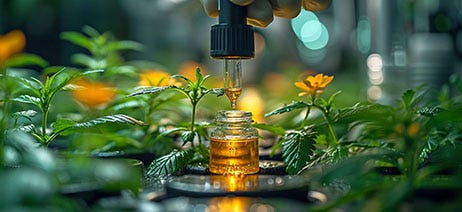
THC Distillate: What It Is, How It’s Made, How to Use It
THC distillate is a unique cannabis product in that it is essentially just Tetrahydrocannabinol (THC) in a gooey, liquid form. Both potent and versatile, there is much to learn about distillate.
In this guide, we’ll talk about this popular product and everything you should know about it, answering the questions:
- What is THC Distillate?
- How is THC Distillate Made?
- How is THC Distillate Different From Other Cannabis Concentrates?
- How Do You Use THC Distillate?
- What Are the Pros and Cons of THC Distillate?
- FAQs About THC Distillate
THC Distillate
Also: Distillate, Distillate THC, Liquid Gold
THC distillate is a highly refined form of cannabis extract that contains a very high concentration of THC. Unlike other extracts, cannabis distillate is purified to remove all the plant compounds, including terpenes, flavonoids, and other cannabinoids, leaving only THC behind. The process results in a clear, odorless, flavorless, and thick golden-amber-colored product that can be used in various ways.
What Is THC Distillate?
THC distillate is a concentrated and highly refined liquid form of THC. The thick, pure THC extract is famous for its extremely high potency. We are talking THC levels of 90-99%, making distillate extremely potent stuff.1
However, contrary to what you might think, a higher THC content doesn’t guarantee a stronger high. This is because even though studies show that THC can produce psychoactive effects, it doesn’t work alone.2 It is believed that other cannabinoids and terpenes work alongside THC to produce its desired effects through what is known as the entourage effect.

THC distillate is a concentrated and highly refined liquid form of THC. The thick, pure THC extract is famous for its extremely high potency. We are talking THC levels of 90-99%, making distillate extremely potent stuff.1
However, contrary to what you might think, a higher THC content doesn’t guarantee a stronger high. This is because even though studies show that THC can produce psychoactive effects, it doesn’t work alone.2 It is believed that other cannabinoids and terpenes work alongside THC to produce its desired effects through what is known as the entourage effect.
Due to its highly refined nature, THC distillate contains only trace amounts of terpenes and other cannabinoids. The absence of supporting cannabinoids means THC distillate’s psychoactive effects may not be as intense as you expect. In fact, a recent study by the University of Colorado3 found that people who consumed high-potency THC concentrates, like distillate, did have higher levels of THC in their blood but did not exhibit higher levels of intoxication compared to people who consumed less-potent cannabis flower.3
Also, since distillate undergoes extensive purification during production, it doesn’t contain enough terpenes to have a discernible taste or scent. Its scentless nature makes THC distillate a viable choice for those who don’t like marijuana’s flavor. You can enjoy it in several ways, including edibles, dabs, and infusions.

How Is THC Distillate Made?
To make THC distillate, manufacturers utilize an extraction system. This typically involves pushing a solvent, like butane, through dried cannabis flowers to extract a thick, oily substance. The oil then undergoes a refining and purifying process to give you THC distillate.
Since safely making THC distillate requires having the right equipment, environment, and know-how, you should not attempt it at home. Wrongly handling solvents may cause fires, respiratory irritation, headaches, dizziness, or chemical burns.
But if you’re curious about the process, here’s a quick breakdown of how manufacturers turn cannabis into THC distillate:4
- Extraction: Grind cannabis and mix it with a solvent like ethanol or butane to extract cannabinoids as an unrefined cannabis oil.
- Winterization and Filtration: Freeze the unrefined oil to separate and filter out lipids, fats, and waxes.
- Evaporation and Decarboxylation: Expose the oil to low heat to evaporate the solvents and activate cannabinoids (e.g., turning THCA into THC). 5, 6 Without this step, you’ll get THCA distillate instead of THC distillate.
- Distillation: Vacuum distillation separates THC from other cannabinoids and compounds, bringing you closer to having pure THC distillate.
- Purification: Vacuum filtration or chromatography filters out missed impurities and enhances potency.
- Testing: This confirms a batch of THC distillate’s potency and purity.
Once THC distillate passes purity and potency tests, it’s packaged and sent to your favorite dispensary. You can buy it in different forms, including edibles, tinctures, and vape cartridges.
How Is THC Distillate Different from Other Cannabis Concentrates?
Cannabis concentrates encompass a wide variety of products with high levels of cannabinoids. With so many options, you may be wondering how THC distillate differs from other concentrates. Below, we’ll break down the key differences between distillate and popular types of concentrates so you have a better understanding of your options.

THC Distillate vs. Cannabis Oils
THC distillate is a type of cannabis oil made by extracting oil from marijuana plants and refining it to remove other cannabinoids and terpenes. This gives you a pure product with high THC content, often exceeding 90%.1
Cannabis oil, on the other hand, contains a wide range of cannabinoids and terpenes, including THC and cannabidiol (CBD). Unlike pure THC distillate, which is tasteless and scentless, cannabis oil can have a pronounced marijuana flavor because it’s less refined. You can use both products in many of the same ways, but distillate’s flavorlessness makes it ideal for oral and sublingual use if you don’t like the taste or smell of cannabis.
Because cannabis oil contains other cannabinoids and terpenes, the entourage effect may cause it to produce different effects than pure THC distillate.
THC Distillate vs. Rosin
THC distillate typically has a liquid, smooth consistency and clear appearance. Rosin, on the other hand, is thicker, with a honey or wax-like consistency. Its color is darker than distillate’s, varying between light amber and dark brown.
While THC distillate contains THC and trace amounts of other cannabinoids, rosin contains a complete profile of cannabinoids and terpenes. This makes dabbing, vaping, or smoking rosin ideal for experiencing cannabis’s full cannabinoid and terpene profile.
But THC distillate may be preferable if you want only the effects of THC. Plus, unlike rosin, you can also use distillate orally, sublingually, or topically.
One final key difference is in rosin’s extraction method. Unlike distillate, rosin is manufactured without the use of solvents like butane. Instead, heat and pressure are used to extract the desired cannabinoids and terpenes.7
THC Distillate vs. Isolate
THC isolate can have a THC content of 99% or higher, making it even purer and more potent than distillate. THC isolate achieves this because it undergoes a more extensive process during manufacturing.8
Unlike THC distillate, which is liquid, THC isolate typically comes as a crystallized powder. You can take the powder orally or sublingually, or you can sprinkle it on cannabis buds to smoke. You can also mix it into creams and oils for topical use or dab it. While you can use THC distillate in many of the same ways, its THC effects may be less pronounced than isolate due to its lower potency.
THC Distillate vs. Resin
Resin is a cannabis concentrate made from the sticky substance that coats the surface of marijuana buds and leaves. It contains a rich profile of cannabinoids and terpenes, including THC. This is unlike THC distillate, which contains only THC.
Also, unlike distillate THC, which is scentless and flavorless, resin’s terpene content gives it a cannabis-forward aroma and flavor. You can smoke or vape resin or try edibles to experience its broad spectrum of cannabinoids. THC distillate, on the other hand, is more versatile since you can smoke, vape, and swallow it, or use it sublingually and topically.
How Do You Use THC Distillate?
There are a few ways you can consume THC distillate, and all are popular options among marijuana enthusiasts. Here are some of the top ways both our customers and budtenders enjoy their cannabis distillate:
- Vape: If you purchase vape cartridges or disposable vape pens, chances are you’ve already enjoyed THC distillate. While you certainly can find vape cartridges and pens with cannabis oils that contain cannabinoids and terpenes, there are also brands that offer a simple THC distillate vaping experience.
-
Edible: If you don’t like to smoke your cannabis products, THC distillate is a great option for you. Because it’s already decarboxylated, you can add it to just about any food or drink, provided you don’t plan to cook it (this would ruin your distillate).

- Dabbing: If you already have a dab rig, pick up a THC distillate syringe. This enables you to dab your distillate versus vaping it. Just be prepared: Dabbing THC distillate creates a much stronger effect, so start with a low dose and increase once you know just how intoxicating the experience is.
- Infuse: If you love your flower (and all of the cannabinoids and terpenes that contribute to the entourage effect), you can infuse it with THC distillate. Whether rolling your flower as a joint or packing it into a bowl, you can add a few drops of distillate. This will increase the potency of your flower and create a much stronger experience.
- Syringe: Besides loading your dab rig, there are other ways to use THC distillate with a syringe. For example, syringes let you measure precise doses of distillate THC before adding them to meals, drinks, or cannabis buds. You can also use a syringe as a convenient dropper when taking THC distillate sublingually or orally.

Pros and Cons of THC Distillate
THC distillate has potential benefits and drawbacks that may dictate whether it’s something you want to try. Let’s look at the pros and cons of this potent cannabis product.
Pros
- Versatile: THC distillate doesn’t limit you to one consumption method. Pick your favorite between using it topically, orally, sublingually, vaping it, or dabbing it.
- Accurate Dosing: Its high concentration and purity make it easy to measure and monitor your THC doses.
- Odorless and Flavorless: THC distillate’s neutral flavor means you can mix it into your favorite foods and drinks without changing their tastes.
Cons
- Expensive: THC distillate costs more than most other cannabis concentrates.
- Restricted Access: You may be in one of the states where cannabis products with more than 0.3% THC are illegal.11
- No Entourage Effect: You won’t experience the entourage effect because distillate contains only THC. If you want to experience the entourage effect, go for broad- or full-spectrum cannabis products, which have fuller cannabinoid and terpene profiles.12
How to Buy THC Distillate
If you live in a state where THC is legal, buying distillate should be as easy as visiting your local, reputable dispensary and asking if they have it. You can also buy THC distillate online in some states.
Dispensaries will ask for ID to verify you are of legal age before selling you THC distillate. Also, in states that allow cannabis only for medical use, you will need a medical card in order to buy THC distillate at a dispensary.


Answering FAQs About THC Distillate
There are a few common questions we get about distillate THC. They include:
What is a THC distillate syringe?
A THC distillate syringe is a syringe without a needle that you can use to accurately and easily dose your THC distillate.13 While many distillate syringes are designed for sublingual (under the tongue) consumption, you can also use a syringe to add a bit of THC to food or drinks. Check your THC syringe’s packaging to learn the best way to consume your product.
Is THC distillate the same as THC?
THC distillate is essentially pure THC, the primary psychoactive compound in cannabis. This potent liquid extract is derived from dried cannabis flowers and offers one of the strongest cannabis experiences available.
Is distillate more potent than dabs?
No, distillate isn’t more potent than dabs because distillate is a type of dab. The term “dab” describes concentrates that can be consumed using a dab rig or pen. THC distillate is one of those concentrates. Therefore, THC distillate is one of the most potent dabs you can purchase from your favorite dispensary.
Is THC distillate safe?
Yes, THC distillate is safe if you use it responsibly. If you take too much, you may experience adverse effects, such as extreme drowsiness or overly intense psychoactive effects.14 Also, you should talk to your doctor before taking THC distillate if you are on any prescription medication or have a pre-existing medical condition.
Can you eat THC distillate?
Yes, you can eat THC distillate. Since it’s mostly flavorless and odorless, you can easily down it by itself or mix it into your favorite foods or beverages.
How do you use a distillate syringe?
First, gently warm the distillate syringe in your hand to make the thick liquid more fluid. Then, dispense the desired amount onto a dab tool, a vape pen, or your favorite food or beverage.

Ready to Try THC Distillate?
If you want a potent THC product, THC distillate is worth a try. Since top-shelf THC distillates are 90-99% pure THC, a small dose is all you need to experience your desired effects. You can use distillate in several ways, including smoking, vaping, sublingually, and topically. You can even drink it alone or mix it into foods and drinks since it’s mostly tasteless and odorless.
However, THC distillate may not be for you if you want to experience the entourage effect—the effect of THC alongside other cannabinoids. Whether you know exactly what you want or need a little help deciding, our knowledgeable budtenders are here to make your shopping experience seamless and enjoyable.
Sources:
1. “THC Distillate: What It Is and How to Use It,” veriheal.com, May 14, 2024, https://www.veriheal.com/blog/what-is-thc-distillate/
2. “Tetrahydrocannabinol (THC),” National Library of Medicine, November 12, 2023, https://www.ncbi.nlm.nih.gov/books/NBK563174/
3. “Marijuana concentrates sharply spike THC levels but don’t necessarily get users higher,” CU Boulder Today, June 10, 2020, https://www.colorado.edu/today/2020/06/10/marijuana-concentrates-sharply-spike-thc-levels-dont-necessarily-get-users-higher
4. “How to Make Cannabis Distillate,” precisionextraction.com, April 14, 2021
5. “The Importance of Evaporation in CBD Extraction,” hrs-heatexchangers.com, May 10, 2022, https://www.hrs-heatexchangers.com/news/the-importance-of-evaporation-in-cbd-extraction/
6. “Unlocking the Power of Cannabinoids with Decarboxylation,” cbgbiotech.com, January 16, 2024, https://www.cbgbiotech.com/blog/unlocking-the-power-of-cannabinoids-with-decarboxylation
7. “Rosin vs. Distillate,” agrify.com, August 30, 2022, https://agrify.com/rosin-vs-distillate
8. “THC Isolate vs. THC Distillate,” kolas.com, June 15, 2022,
9. “Know Your Cannabis: Sublingual,” consumecannabis.com, November 1, 2022, https://www.consumecannabis.com/blog/kyc-sublingual
10. “Understanding The Potency of THC Distillate,” getsoul.com, February 16, 2024, https://www.getsoul.com/blogs/cbd-education/thc-distillate
11. “Marijuana Legality by State,” disa.com, July 3, 2024, https://disa.com/marijuana-legality-by-state
12. “Marijuana And the Entourage Effect,” Cannabis Control Division Montana, May 13, 2024, https://mtrevenue.gov/cannabis/education/marijuana-and-the-entourage-effect
13. “A Guide to THC Oil Syringes 2024,” herb.co, June 11, 2024, https://herb.co/guides/a-guide-to-thc-oil-syringes/
14. “Immediate health effects,” Colorado Cannabis, https://cannabis.colorado.gov/health-effects/immediate-health-effects

Recreational cannabis is not available in all states. Cannabis is for medical use only and may only be used by certified patients in Pennsylvania. State laws impact what dispensaries can and can’t sell to recreational customers and certified patients. Not every type of product, consumption method, dosage form, or potency mentioned on this blog will be permitted in all locations.
PharmaCann Copyright ©2026 All Rights Reserved