
Adult Use
Sign up now and get rewards! Join VeriVIP
Due to the shortage of pennies nationwide, your transaction will be rounded to the closest $00.05 (nickel)


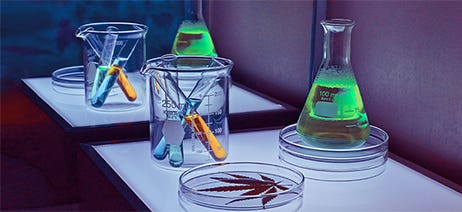
What Are Cannabinoids & How Do They Work?
Cannabis has been around for thousands of years, but we are only now beginning to understand the many chemical compounds that make up this versatile plant. While you’ve probably heard of THC and CBD, you may not be aware of the dozens of other cannabinoids that work together to impact the body in a variety of ways.
In this guide to cannabinoids, we’ll discuss:
- What are Cannabinoids?
- What Do Cannabinoids Do?
- How are Cannabinoids Used?
- What are the Different Types of Cannabinoids?
- FAQs About Cannabinoids
Cannabinoids
Cannabinoids are naturally occurring molecules made specifically by the cannabis plant, including THCA, CBDA, CBGA, and dozens more. These cannabinoids interact with the body’s natural Endocannabinoid System to produce the range of feelings and experiences you get from consuming cannabis.
What are Cannabinoids?
Cannabinoids are compounds found in cannabis that affect our endocannabinoid system (ECS). The most famous and second most famous cannabinoids you likely have already heard of—THC and CBD—but there are many others that occur naturally in the marijuana plant.
You might be thinking, “wait, go back—what’s an endocannabinoid system?” The ECS is our body’s chemical-based network that keeps us balanced, and it’s everywhere. It’s in our nerves, our brains, our muscle tissue. When we introduce cannabinoids from the marijuana plant, it takes our bodies out of balance in a way that’s unique to each individual. That’s why the way you experience a certain cannabinoid might not be how someone else experiences it. It’s also why researchers are taking a good hard look at cannabinoids to explore any potential therapeutic effects for a variety of conditions.

What Do Cannabinoids Do?
When it comes to what cannabinoids do, there are things we know and things we are still trying to figure out. For example, we know that cannabinoids (specifically THC and CBD though there are over 100 others1) bind with CB1 and CB2 receptors in the body. This can create sensations that range from fatigued to energized, depending on the person and their endocannabinoid system. But what if we could use the interaction between our ECS and cannabinoids to our advantage?
That’s exactly what scientists are researching now to better understand if cannabinoids could be a treatment option for certain conditions. Specifically, they want to know if cannabinoids can influence the nervous system for things like pain, anxiety, mood, and more.2 There’s also research being done on the peripheral effects of cannabinoids. CB1 and CB2 receptors are in our skin, bones, gut, and more,2 so could cannabinoids help with conditions related to those areas of the body?
We don’t know. At least, we don’t know yet. We’re still in the very early stages of our research, but the science is fascinating and worth keeping your eye on.

How are Cannabinoids Used?
Talk to a handful of different cannabis consumers, and there’s a good chance that they’ll each give you a different reason for indulging in cannabinoids. Some people are looking for the psychoactive effects of marijuana. Others were interested in the potential benefits of cannabinoids like CBD. Still, others are searching for a full-spectrum product to create the entourage effect, so they can better understand how cannabinoids feel in their body.
There are also researchers studying cannabinoid use to help with certain functions in the body, like memory, inflammation, and more. If cannabinoids can be tied to these functions, it’s possible they could be used for future treatment options. Right now, CBD is the only cannabinoid that’s earned the FDA’s stamp of approval in a treatment for severe forms of epilepsy called Lennox-Gastaut syndrome and Dravet syndrome.3 We hope to see that change as more research comes out about cannabinoids and their effects in the body.
What are the Different Types of Cannabinoids?
You already know that THC and CBD are by far the most well known and studied cannabinoids out there. But there are more than 100 that have been identified, in addition to other phytochemicals.
The following are a few of the most common cannabinoids you may see highlighted in cannabis products on the market:

THC
THC (delta-9-tetrahydrocannabinol) is one of the more familiar cannabinoids due to the notoriety of its intoxicating effects. How does THC manage to do that? It binds to both CB1 and CB2 receptors, making it the most powerful of the bunch.

CBD
CBD (cannabidiol) may be the second-most prominent cannabinoid within the cannabis plant, but it’s being used in everything from supplements to smoothies. In fact, the FDA approved CBD as an active ingredient in a treatment for rare forms of Epilepsy (Lennox-Gastaut syndrome and Dravet syndrome), but currently not as a food additive.

THCA
THCA is the non-psychoactive precursor to THC. This cannabinoid is produced inside the cannabis plant, but it converts to THC when exposed to heat (e.g. lighting the flower). So, if you see THCA on the label, that means you’ll need to heat the product before consuming it.

CBN
CBN (cannabinol) can produce an intoxicating response, but only marginally so compared to THC. This is because CBN is actually THC that has been broken down after long-term exposure to heat and oxygen. This is why older marijuana may lose potency as THC decreases and CBN increases.

THCV
THCV (tetrahydrocannabivarin) is a psychoactive cannabinoid, but likely only in high doses. It has also been suggested that THCV reduces appetite by blocking one of the cannabinoid receptors.

CBC
CBC (cannabichromene) is the second most abundant cannabinoid (after THC) and does not produce intoxicating effects. What makes this compound different from the others is that it doesn’t directly interact with CB1 receptors. Rather, it binds with the lesser-known TPRV1 and TRPA1 receptors within the endocannabinoid system.

CBG
CBG (cannabigerol) is only found in trace amounts in the cannabis plant, but its precursor is CBGA, the foundational molecule for all other cannabinoids. A non-intoxicating compound that binds directly to both the CB1 and CB2 receptors, we we still don’t know much about CBG and its potential.

CBDV
CBDV is a naturally occurring compound found in cannabis plants, particularly those with higher levels of CBD. It is structurally similar to CBD, and it doesn't produce intoxicating effects.

FAQs About Cannabinoids
Cannabinoids are some of the most fascinating compounds found in marijuana, so it makes sense we get a lot of questions about them. Here are just some of our frequently asked cannabinoid questions:
How many cannabinoids are there?
There are actually over 100 different cannabinoids found in marijuana, including the ones we’re most familiar with—THC and CBD.1
What is the effect of cannabinoids on humans?
The effect of cannabinoids on humans depends on the human. We all have a unique endocannabinoid system that processes cannabinoids differently. Because of this, we can only make generalizations about the effect of certain cannabinoids. For example, we know THC will cause a psychoactive response in the body, but how you experience THC may be very different from how someone else experiences THC.
Is CBD and “cannabinoid” the same?
CBD is a cannabinoid, one of the hundreds that are found in the cannabis plant. Other cannabinoids include THC and CBN.
Is THC a cannabinoid?
Like CBD, THC is one of the many cannabinoids found in cannabis.
What is the most potent cannabinoid?
We’re still doing a lot of research into cannabinoids to really understand them and their effects on our bodies. That said, THC still holds the trophy for being the most potent cannabinoid found in marijuana.2 It is the #1 contributor to the psychoactive effects you feel when consuming marijuana.

Experience Cannabinoids for Yourself
Curious about cannabinoids? We don’t blame you. If you’re interested in your own cannabinoid experience, view our menu to check out the products we have available and then come on down. Our budtenders can walk you through the products you’re interested in, the prominent cannabinoids in them, and help you make a decision (and maybe find a new favorite product).
Sources:
1. “Cannabis (Marijuana) and Cannabinoids: What You Need To Know,” National Center for Complementary and Integrative Health, November 2019, https://www.nccih.nih.gov/health/cannabis-marijuana-and-cannabinoids-what-you-need-to-know
2. “What are cannabinoids?” Weedmaps, August 16, 2024, https://weedmaps.com/learn/dictionary/cannabinoid
3. “FDA Approves First Drug Comprised of an Active Ingredient Derived from Marijuana to Treat Rare, Severe Forms of Epilepsy,” U.S. Food and Drug Administration, June 25, 2018, https://www.fda.gov/news-events/press-announcements/fda-approves-first-drug-comprised-active-ingredient-derived-marijuana-treat-rare-severe-forms
4. “What are cannabinoids?” Alcohol and Drug Foundation, January 6, 2025, https://adf.org.au/drug-facts/cannabinoids/

Recreational cannabis is not available in all states. Cannabis is for medical use only and may only be used by certified patients in Pennsylvania. State laws impact what dispensaries can and can’t sell to recreational customers and certified patients. Not every type of product, consumption method, dosage form, or potency mentioned on this blog will be permitted in all locations.
This content is not intended as medical advice. The information provided is meant to encourage cannabis education, not replace direct patient-healthcare professional relationships. Always consult your primary care physician or other healthcare provider prior to using cannabis products for treatment of a medical condition. Any statements contained herein have not been evaluated by the Food and Drug Administration. Products referenced are not intended to diagnose, treat, cure, or prevent any disease. Products are only available where consumption of cannabis is legal.
PharmaCann Copyright ©2026 All Rights Reserved